The Ubuyantashi Project with our Zambia partner, Eliashib Restoration Organisation, will provide Vocational Training to 40 women in the Old Mushili and Kaloko communities of Ndola.
Project Need
Zambia is one of the world’s youngest countries by median age. 80% of the population is aged below 35 years (Zambia Statistics Agency 2022) and youths face increasing challenges to find meaningful, lucrative and sustainable employment. A comprehensive assessment undertaken by our partner, Eliashib Restoration Organisation, showed that lack of skills training greatly impacts the ability of young people in the Ndola area to access jobs, health care, and other social services. These challenges are felt most keenly by young women.
The Ubuyantashi Project
It is against this backdrop that the Ubuyantashi Project aims to develop the lives of those taking part and move them from unemployment or underemployment forward into gainful and fulfilling work with newfound confidence, social standing and security. “Ubuyantashi” is a bemba word meaning sustainability, development or moving forward.
Moving forward
Starting in June 2025, the Ubuyantashi project will support women from female-headed households to learn trade and business skills. 20 participants will learn Tailoring & Fashion Design and 10 will enrol to learn Catering & Hospitality. 10 participants will join the project under our General Agriculture programme.
Vocational training will be delivered at the Eliashib training centre. Here, an on-site creche will provide a safe space for children and enable their mothers to consistently attend training and ease the pressure of caregiving responsibilities. In the first 9 months of the project, participants will complete centre-based training, before undertaking local work placements.
In the final phase of the project trainees will write their exams, and take part in activities to benefit the wider community whilst showcasing themselves as talented makers.
Project Updates
 Project launch
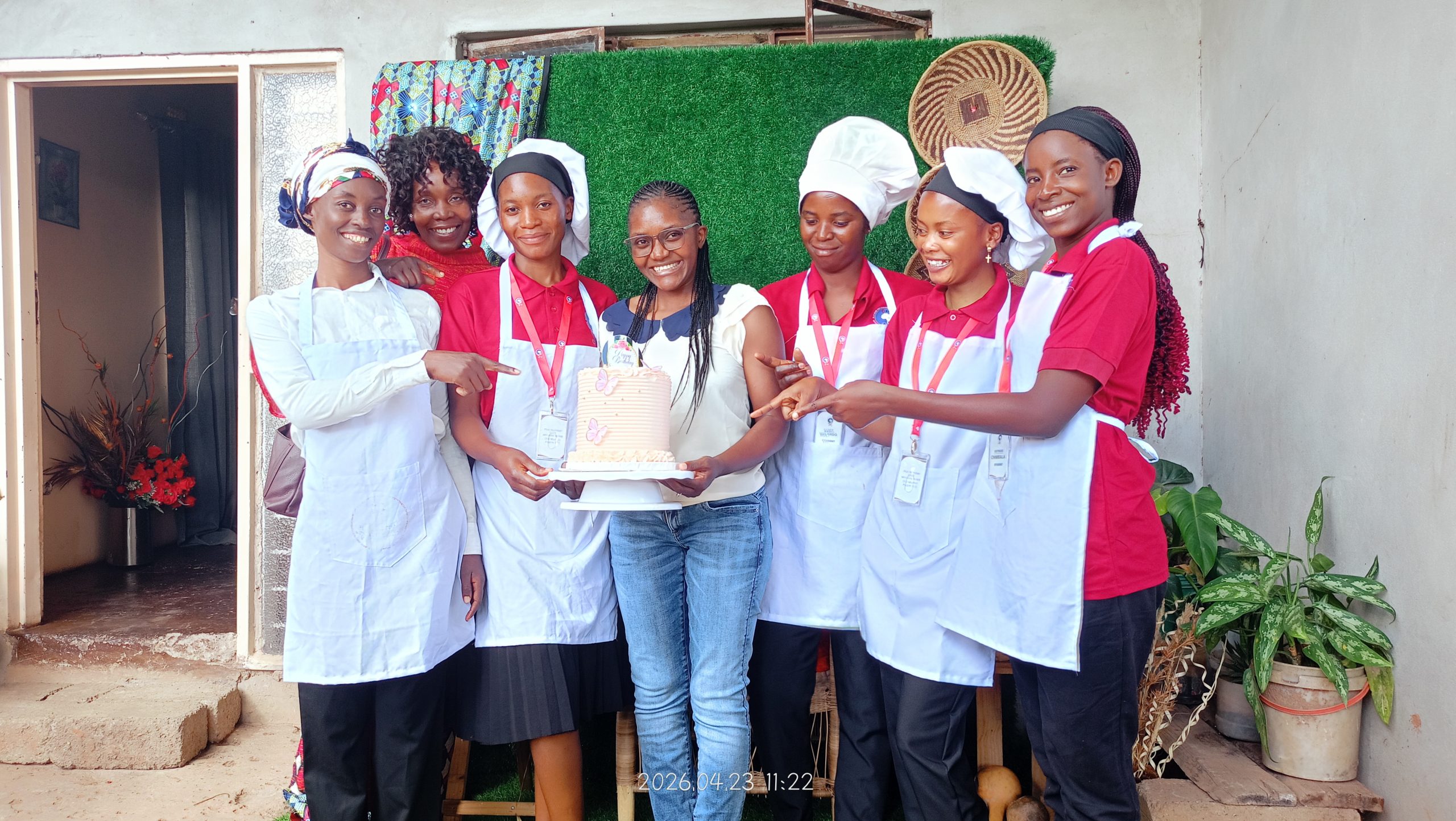
Twenty trainees have joined our Vocational Training project to learn Tailoring & Fashion Design or Catering & Hospitality.
Find out more
Catering
10 women from the Ndola district will gain the skills, confidence and qualifications to work in Catering & Hospitality.
Find out more
Tailoring
Our Tailoring trainees are learning to take accurate body measurements to make a range of skirts and children’s outfits.
Find out more
Work experience
Trainees on our Ubuyantashi project are gaining hands on work experience through placements with previous graduates.
Find out moreProject impact

39
Women completed their training and graduated

100%
Graduates moved into meaningful work

86%
Graduates reported an increase in their income

100%
Graduates started making regular savings

72%
Graduates reported an increase in their wellbeing
Participation: 40 women joined the Ubuyantashi project, 20 to train in Tailoring & Fashion Design, 10 to train in Catering & Hospitality, and 10 to train in General Agriculture. 39 women completed their training. 1 woman left the General Agriculture project early as she secured an opportunity to pursue tertiary education in nursing.
Employment: All project graduates moved from unemployment or underemployment into meaningful work experience through their industrial placements. This was a major step for participants who had been out of work, strengthening their confidence and understanding of professional standards and building a strong foundation for future self-employment.
Income: 86% of trainees reported increased monthly income, rising from £0.32 before the project to £14.85 by the end. This was largely achieved through connecting participants to local market day sales. This project focused on skills attainment, so income changes are modest at this stage but expected to grow as trainees move onto the Transition to Work phase.
Savings: Financial resilience improved substantially through business training and VSLA training. All 39 trainees reported improved savings, moving from no savings before the programme to collective savings of ZMW 37,852 (circa £1,418), demonstrating stronger financial discipline and protection against economic shocks.
Wellbeing: Wellbeing and self-confidence grew. Project staff noted strong improvements in trainee self-confidence, and 72% of participants reported a stronger sense of contribution to their families and communities between baseline and endline.